Installation
- Editorial
- 08 Sep, 2026

Offshore wind installation is one of the most demanding and awe-inspiring feats of modern engineering. At Veja Mate, the installation phase transformed years of planning into a tangible, energy-producing reality in the German North Sea. This article explores the intricate process, the vessels and people involved, and the lessons learned from constructing one of Europe’s most ambitious offshore wind farms.
From Blueprint to Open Sea: The Installation Challenge
Installing an offshore wind farm is fundamentally different from building on land. Every component—foundations, towers, nacelles, and blades—must be transported dozens of kilometres into open water, then precisely positioned and secured in a dynamic environment of wind, waves, and currents. At Veja Mate, located approximately 95 kilometres northwest of Borkum, the North Sea’s notorious weather windows demanded meticulous planning and flexibility.
The project’s installation phase began in 2016, following extensive site surveys and foundation design. Veja Mate’s 67 Siemens SWT-6.0-154 turbines, each with a capacity of 6 megawatts, required a coordinated ballet of specialised vessels, skilled crews, and just-in-time logistics. The goal was not merely to erect turbines but to build a reliable power plant that would operate for at least 25 years in one of the harshest marine environments on Earth.
Foundations: Monopiles and Transition Pieces
The first major installation step was placing the foundations. Veja Mate uses monopile foundations—massive steel tubes driven into the seabed. Each monopile for Veja Mate weighed up to 1,000 tonnes and measured over 70 metres in length, with diameters exceeding 7 metres. These giants were fabricated onshore, then loaded onto purpose-built installation vessels equipped with heavy-lift cranes and hydraulic hammers.

Once on site, a jack-up vessel would lower its legs to the seabed, raising itself above the waves to create a stable platform. The monopile was then upended, positioned using GPS and transponders, and driven into the seabed with a hydraulic hammer delivering thousands of kilojoules per blow. Achieving the precise verticality and penetration depth was critical; tolerances were often less than 0.5 degrees. After the monopile was installed, a transition piece—a yellow-painted steel section with a work platform, boat landing, and J-tubes for cables—was grouted or bolted on top, providing the interface for the turbine tower.
Turbine Erection: Tower, Nacelle, and Blades
With foundations complete, the turbine components were transported from the port of Eemshaven in the Netherlands, a key logistics hub for Veja Mate. The installation vessel carried multiple towers, nacelles, and blade sets per trip, reducing transit time and fuel consumption. Each tower, split into two or three sections, was lifted and bolted to the transition piece using specialised flange connections.
The nacelle—housing the generator, gearbox, and control systems—weighed around 300 tonnes and required a precise lift to align with the tower’s yaw bearing. Finally, the three 75-metre blades were either assembled on deck into a rotor and lifted as a single unit, or installed individually, depending on the vessel’s crane capacity and weather conditions. At Veja Mate, the single-blade installation method was often used to reduce wind exposure during lifting, allowing work to continue in higher wind speeds than would be possible with a full rotor lift.
Array Cables and Offshore Substation
While turbines are the most visible result of installation, the electrical infrastructure is equally vital. Veja Mate’s turbines are connected by a network of 33 kV inter-array cables, laid on the seabed and buried to protect them from fishing gear and anchors. Cable-laying vessels used remotely operated vehicles (ROVs) to monitor burial depth and cable integrity. Each cable was pulled into the turbine foundation through J-tubes and terminated by skilled technicians working in confined spaces.
The power generated by the turbines is collected at an offshore substation, which Veja Mate shares with the neighbouring Global Tech I wind farm. This substation, a massive steel platform installed in 2015, steps up the voltage to 155 kV for transmission to shore via an export cable. The installation of the substation itself was a milestone: a single lift of over 10,000 tonnes, executed by one of the world’s largest crane vessels. Coordination between Veja Mate and Global Tech I during this phase exemplified the collaborative nature of offshore wind development.
“Every lift at sea is a calculated risk. You plan for the worst weather, the tightest tolerances, and the most unexpected failures—then you execute with absolute focus.”
Vessels, Crews, and Logistics
The installation fleet for Veja Mate included jack-up vessels like the Pacific Orca and Bold Tern, each capable of carrying up to four complete turbine sets. These vessels are essentially floating construction sites, with accommodation for up to 100 personnel, helidecks, and dynamic positioning systems. Supporting them were crew transfer vessels (CTVs) for daily technician transfers, service operation vessels (SOVs) for longer stays, and tugs and barges for component transport.
Logistics were orchestrated from a project control centre, where planners tracked weather forecasts, vessel positions, and component availability in real time. The port of Eemshaven served as the marshalling yard, where towers, nacelles, and blades were stored and pre-assembled. Just-in-time delivery was essential: a single delayed component could idle a vessel costing hundreds of thousands of euros per day. Veja Mate’s team developed robust contingency plans, including alternative ports and spare parts inventories, to keep the installation on schedule.
Weather, Safety, and Environmental Stewardship
The North Sea’s weather is both a blessing and a curse: strong winds are the resource Veja Mate harvests, but they also limit installation windows. The project team used advanced weather forecasting models to identify workable periods, often as short as a few hours. Installation was typically suspended when wind speeds exceeded 12–15 metres per second for crane operations, though some tasks, like cable laying, could continue in higher seas.
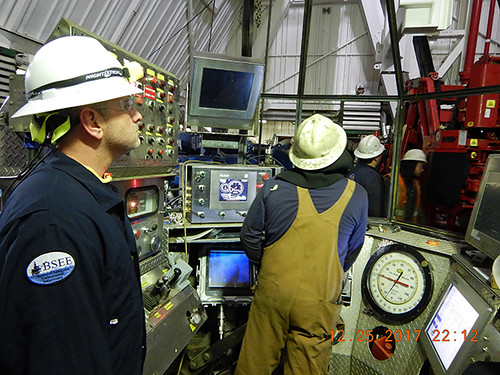
Safety was paramount. Every lift was preceded by a toolbox talk, a risk assessment, and a go/no-go decision based on real-time conditions. Workers wore personal flotation devices and were trained in sea survival. The project achieved an impressive safety record, with millions of working hours without a lost-time incident. Environmental measures included using low-noise piling techniques to protect marine mammals, such as bubble curtains that dampen sound waves, and scheduling construction to avoid sensitive periods for harbour porpoises.
Commissioning and Lessons Learned
After each turbine was mechanically complete, commissioning engineers tested electrical systems, communication links, and safety functions. The first power from Veja Mate was generated in early 2017, and the final turbine was installed in May 2017—ahead of schedule. Full commissioning followed, with the wind farm reaching its design output of 402 megawatts, enough to power approximately 400,000 German households.
The installation of Veja Mate yielded valuable lessons for the offshore wind industry. The use of larger, more capable vessels reduced the number of lifts and transit times. Improved grouting and bolting techniques enhanced foundation reliability. Digital tools, such as 3D modelling and remote monitoring, allowed engineers to troubleshoot problems without sending technicians offshore. These insights are now being applied to newer projects, including those using even larger turbines and floating foundations.
For those interested in the broader context of Veja Mate’s development, the The Project page offers an overview, while Turbines details the technology behind the machines. The Offshore Wind section explores the industry’s evolution, and About introduces the people and partnerships that made it possible.