Veja Mate Offshore Project Installs OSS
- Editorial
- 15 Aug, 2026
Veja Mate Offshore Project is pleased to announce the installation of its Offshore Substation (OSS) delivered by FICG. Just last week the OSS topside left Hoboken Belgium and sailed-away to Eemshaven where it was picked up a few days later by Heerema Marine Contractors (HMC). It joined the OSS jacket which had left Vlissingen Netherlands to arrive at the Veja Mate Offshore Site after a three-day journey.
The Senior Project Manager for the OSS said “Thanks to the hard work and dedication of our staff, FICG and HMC, the installation went like clockwork from start to finish.”
Veja Mate began construction in April 2016 and remains on schedule; the next activity planned is the installation of its inter array cables, which is set to begin on October 1st.
Veja Mate is a 402 MW, 1,9 bn EUR offshore wind project owned by the Highland Group Holdings Ltd, Siemens Financial Services and CI II managed by Copenhagen Infrastructure Partners. Bank financing was completed on the 1st of July 2015. Construction started on the 4th of April 2016 and the project is expected to be fully operational by the end of 2017. It will produce over 1,6 TWh of green, renewable electricity annually, equivalent to the annual consumption of 400.000 German households.
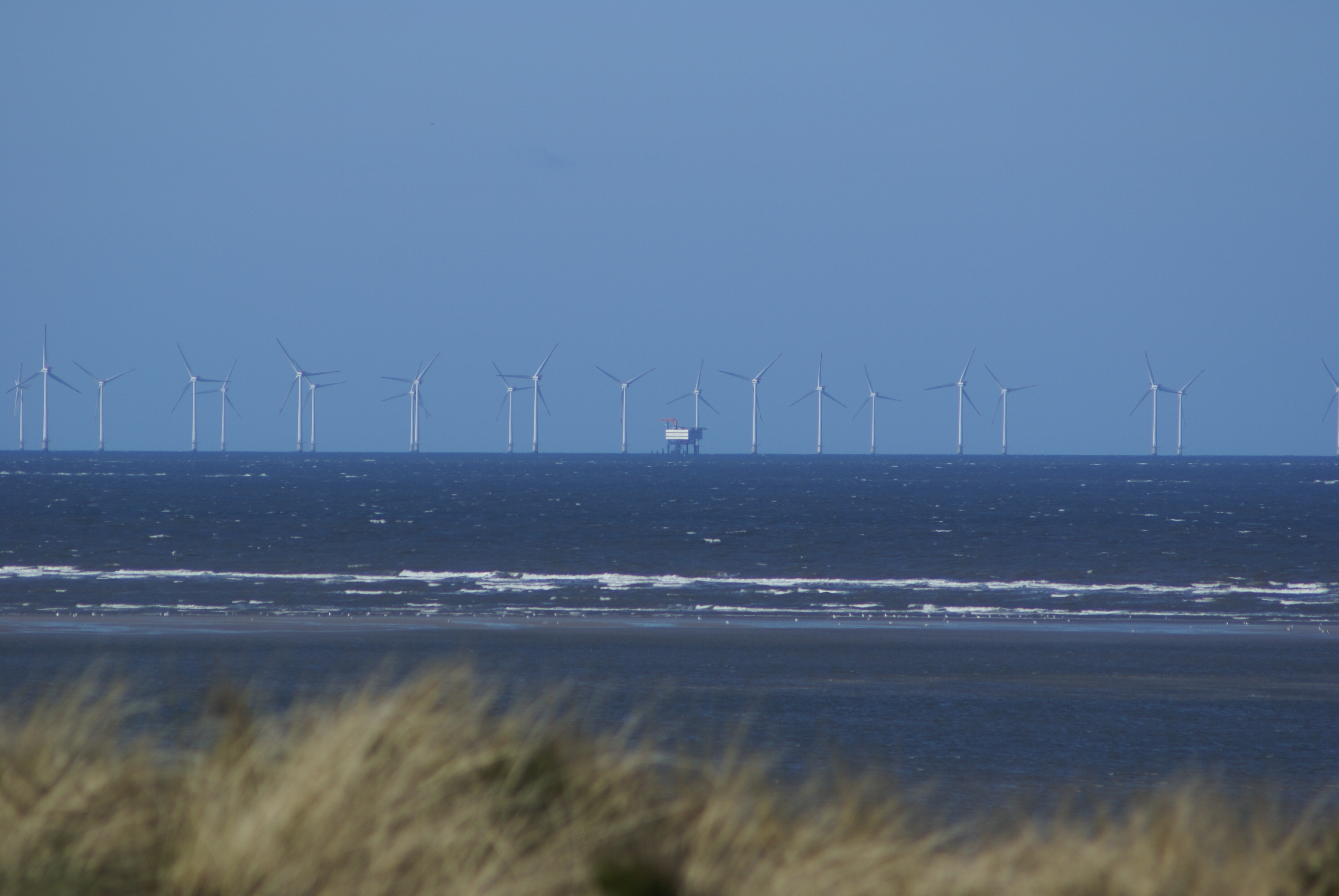
About the Offshore Substation (OSS)
The offshore substation is the electrical heart of the Veja Mate wind farm. It collects the power generated by the 67 Siemens SWT-6.0-154 wind turbines, each with a capacity of 6 megawatts, and transforms the voltage from 33 kV to 155 kV for efficient transmission to shore. The OSS consists of a topside, which houses the electrical equipment, and a jacket foundation that anchors it to the seabed. The topside weighs approximately 2,500 tonnes and was fabricated by FICG (Fabricom, Iemants, CG) in Hoboken, Belgium. The jacket, a four-legged steel structure, was built in Vlissingen, Netherlands, and stands about 50 meters tall in a water depth of approximately 40 meters.
The installation of the OSS is a critical milestone in the project timeline. The topside was transported from Hoboken to Eemshaven, Netherlands, by barge, and then lifted onto the jacket by Heerema Marine Contractors' heavy lift vessel. The entire operation was completed with precision, as noted by the project's Senior Project Manager for the OSS. The OSS will serve as the central hub for the wind farm's electrical infrastructure, connecting to the inter-array cables and the export cable that links to the offshore converter platform BorWin beta, part of the BorWin2 grid connection system operated by TenneT.
The OSS is designed to withstand harsh North Sea conditions, including high winds, waves, and corrosive saltwater. It is equipped with redundant systems to ensure high availability and reliability. The substation includes transformers, switchgear, control systems, and auxiliary equipment, all housed in a weatherproof enclosure. The topside also features a helicopter deck for maintenance access and a crane for handling equipment.
Project Background and Development
Veja Mate is a 402 MW offshore wind farm located in the German Exclusive Economic Zone (EEZ) of the North Sea, approximately 95 kilometers northwest of the island of Borkum. The project was developed by Highland Group Holdings Ltd, Siemens Financial Services, and CI II, managed by Copenhagen Infrastructure Partners. The final investment decision was made in July 2015, with bank financing completed on 1 July 2015. Construction began on 4 April 2016, and the project is expected to be fully operational by the end of 2017.

The wind farm covers an area of approximately 51 square kilometers, with water depths ranging from 39 to 41 meters. The site was chosen for its strong and consistent wind resources, with average wind speeds of around 10 meters per second at hub height. The project will produce over 1.6 TWh of green, renewable electricity annually, equivalent to the annual consumption of 400,000 German households. This contributes significantly to Germany's Energiewende (energy transition) goals, reducing carbon emissions and supporting the phase-out of nuclear and coal power.
Veja Mate is part of a cluster of offshore wind farms in the German Bight, including neighboring projects such as Deutsche Bucht, Nordsee One, and Borkum Riffgrund. The project benefits from shared infrastructure, such as the BorWin2 grid connection, which was commissioned in 2015. The BorWin2 system includes an offshore converter platform that converts the alternating current (AC) from the wind farm to high-voltage direct current (HVDC) for transmission to shore, reducing losses over the long distance.
Installation Process and Logistics
The installation of the OSS involved careful planning and coordination among multiple contractors. The jacket was loaded onto a barge in Vlissingen and transported to the Veja Mate site, a journey of about three days. Upon arrival, it was lifted into position by Heerema Marine Contractors' crane vessel and secured to the seabed using piles driven into the seafloor. The jacket was then grouted to ensure a stable foundation.
The topside was fabricated and tested in Hoboken, Belgium, before being loaded onto a barge for transport to Eemshaven. At Eemshaven, the topside was transferred to a heavy lift vessel and sailed to the installation site. The lift of the 2,500-tonne topside onto the jacket was a delicate operation, requiring calm weather conditions and precise positioning. The entire installation was completed within a few days, as reported by the project team.

The logistics of offshore installation are complex, involving multiple ports and vessels. Eemshaven served as a marshalling harbor for the OSS, while other components, such as monopiles and transition pieces, were handled at different ports. The project has utilized a variety of vessels, including jack-up installation vessels for the wind turbines and cable-laying vessels for the inter-array and export cables. The successful installation of the OSS demonstrates the project's ability to manage these logistics effectively.
Next Steps: Inter-Array Cable Installation and Turbine Commissioning
With the OSS in place, the next major activity is the installation of the inter-array cables, which are scheduled to begin on 1 October 2016. The inter-array cables connect the wind turbines to the OSS, forming a network that collects the generated power. The cables are typically buried in the seabed to protect them from fishing activities and anchors. The installation will be carried out by specialized cable-laying vessels, which will lay and bury the cables along predetermined routes.
Following the cable installation, the wind turbines will be installed and commissioned. The turbines are Siemens SWT-6.0-154, each with a rotor diameter of 154 meters and a hub height of approximately 102 meters above sea level. The turbines will be installed using jack-up vessels that elevate themselves above the water surface to provide a stable platform for lifting the components. Commissioning involves testing the turbines, connecting them to the grid, and ensuring they operate correctly.
The project remains on schedule, with full operation expected by the end of 2017. Once operational, Veja Mate will be one of the largest offshore wind farms in Germany, contributing to the country's renewable energy targets. The project has already achieved several milestones, including the installation of one-third of its monopiles, as reported in a previous press release.
Grid Connection and Power Transmission
The electricity generated by Veja Mate will be transmitted to shore via the BorWin2 grid connection, operated by TenneT. The BorWin2 system includes an offshore converter platform, BorWin beta, which converts the AC power from the wind farm to HVDC. The HVDC transmission reduces losses over the 125-kilometer submarine cable to the onshore converter station in Diele, Germany. From there, the power is fed into the German high-voltage grid.
The BorWin2 connection was commissioned in 2015 and has a capacity of 800 MW, which is shared by Veja Mate and another wind farm. The connection was one of the first HVDC systems used for offshore wind in Germany, and it has proven to be reliable. TenneT is responsible for the grid connection, while Veja Mate is responsible for the wind farm's internal electrical infrastructure, including the OSS and inter-array cables.
The integration of Veja Mate into the BorWin2 system was a key consideration in the project's design. The OSS is equipped with a 155 kV switchgear that connects to the export cable, which runs from the OSS to the BorWin beta platform. The export cable is approximately 12 kilometers long and was installed in 2016. The successful connection of the OSS to the grid is a critical step toward full operation, and it is expected to be completed in the coming months.
Environmental and Economic Impact
Veja Mate will have a significant positive impact on the environment by displacing fossil fuel-based electricity generation. The 1.6 TWh of annual production is equivalent to avoiding approximately 1.2 million tonnes of CO2 emissions per year, based on the average carbon intensity of the German electricity mix. This supports Germany's climate targets and contributes to the global effort to reduce greenhouse gas emissions.
Economically, the project has created jobs during construction and will continue to provide employment for operations and maintenance. The total investment of €1.9 billion has stimulated the offshore wind supply chain, including ports, fabrication yards, and service providers. The project has also contributed to the development of the German offshore wind industry, which has become a global leader in renewable energy technology.
Veja Mate has received recognition for its quality and safety standards, including the SGS Project Certificate, as announced in a press release. This certification demonstrates the project's commitment to excellence and its adherence to international standards. The project team continues to work diligently to ensure the wind farm is completed on time and within budget, delivering clean energy to German households for decades to come.